1. Tia lays out shells in a repeating pattern: one big shell, then two small shells, over and over. She has 9 shells in the row. How many big shells are there?
ICAS Science Paper A (Year 3)
Paper A is the entry level of ICAS Science, sat by Year 3 students. Entry is through your child's school, an ICAS testing centre or an ICAS partner, not through us.
Last updated: 17 October 2026
The thing to understand first
This is not a test of what your child has memorised.
Most parents prepare for a science test by revising content — the parts of a plant, the states of matter. ICAS Science is built the other way around. It hands your child an experiment, a table of results or a picture, and asks what can be worked out from it. The science knowledge needed is usually ordinary; the work is in the reading and the reasoning.
That is why revision alone rarely moves the mark much, and why a child who loves science can still find the paper unfamiliar.
What the paper looks like
Thirty questions, four options each, 45 minutes. Questions are organised around five scientific capabilities rather than topics:
- Observing and measuring — what does the picture or instrument show
- Interpreting — what does this table or graph tell you
- Predicting and concluding — what would happen if, and what follows
- Reasoning and problem solving — putting two pieces together
- Investigating — how the experiment was set up, and whether it was fair
What Year 3 students find hard
- Telling an observation from an explanation. "The plant near the window is taller" is an observation; "because it got more light" is an explanation. Paper A asks for one and offers the other as a distractor.
- Reading a simple table at all. Many Year 3 students have drawn tables but rarely had to answer questions from one under time.
- Diagrams they have not seen before. The paper deliberately uses unfamiliar apparatus, because recognising it is not the point.
What the mark will look like
ICAS marks run lower than school tests by design. The paper keeps stretching students well past year level, so a result that looks disappointing on a school scale can be a strong ICAS result — read it against the distribution rather than as a percentage.
How to prepare for Paper A
Practise the skill, not the syllabus. When something happens at home — ice melting, a plant wilting, a torch dimming — ask two questions: what did you see, and what do you think caused it. Keeping those two separate is most of what Paper A tests.
Common questions
Which year level sits ICAS Paper A?
Year 3. ICAS names its papers by letter rather than by year — Paper A is Year 3 and Paper F is Year 8 — so a Year 3 student sits Paper A.
How long is Science Paper A?
30 questions in 45 minutes.
What does Paper A actually test?
Keeping observation and explanation apart — what you saw, as against what you think caused it. Most of the paper rests on that one distinction.
Year 3 also sits: Maths Paper A · English Paper A · Spelling Paper A
Sample questions
Try each one first, then open the answer and worked solution under it.
Answer and worked solution
Correct answer: B
The pattern repeats in groups of 3 shells: one big and two small.
Nine shells make 3 of these groups, because 3 + 3 + 3 = 9.
Each group has one big shell, so there are 3 big shells.
There are 3 big shells in the row of 9.
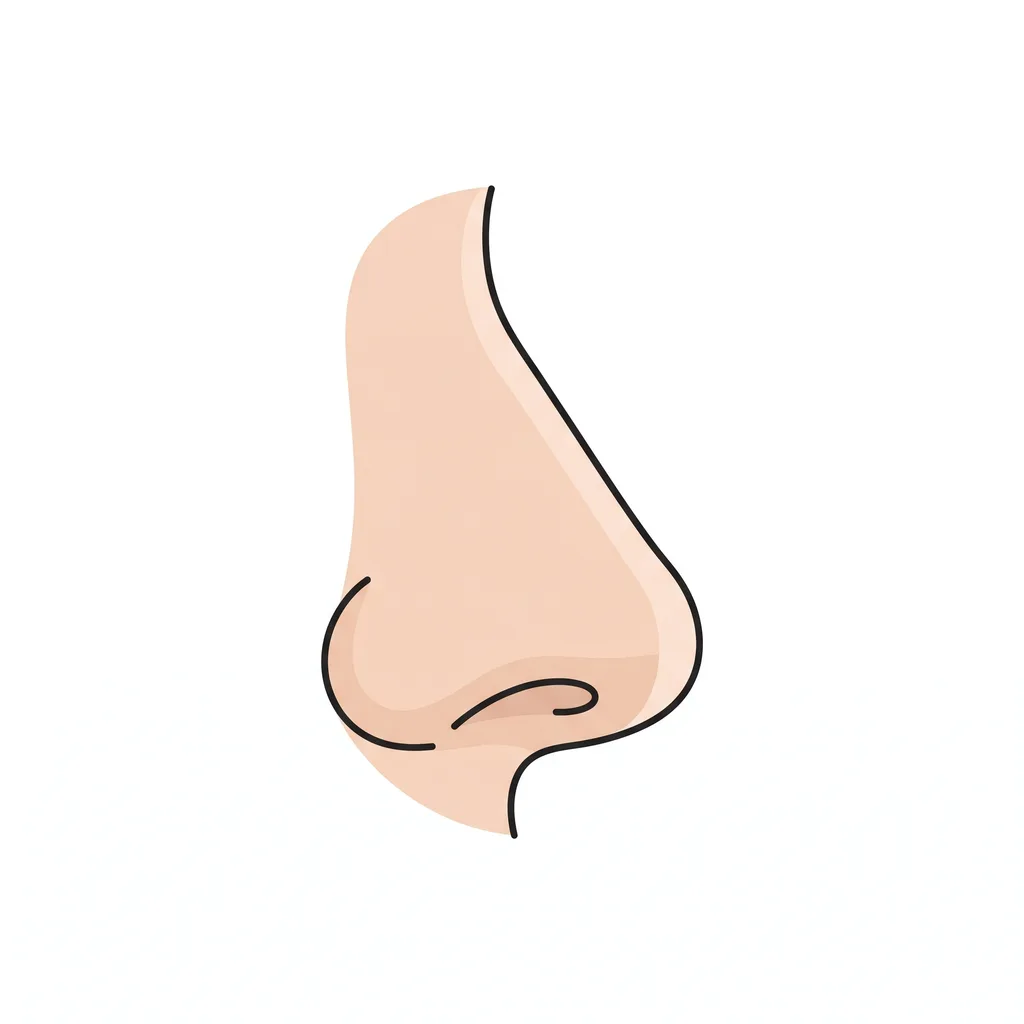
2. In this picture of a nose, one of the marked parts is the straight firm ridge running down between the eyes and the soft front point. Which letter marks that ridge?
Answer and worked solution
Correct answer: B
Work down the nose from top to bottom and name what each mark sits on.
The highest mark is where the nose meets the forehead, and the lowest two are the soft point and the opening beneath it.
Between the highest and the soft point runs the firm ridge, and that is where the remaining mark sits.
The firm ridge running down the nose is marked B.
3. Insects are the animals that have six legs. Look at the four photographs and choose the one that shows an insect.
Answer and worked solution
Correct answer: C
The rule is given in the question: an insect is an animal with six legs, so the job is to count legs in each photograph.
One animal has none at all, one has a pair on section after section running the whole length of its body, and one has four pairs.
The remaining animal has three pairs, which is six legs, so that is the insect.
The animal with three pairs of legs is the insect.
Practise free, no account needed. Every paper is marked the moment your child finishes, with a worked solution on every question.
Free practice draws from a limited set of questions, so some will repeat. Subscribers get the full question bank and fewer repeats.
Related papers: Science Paper B (Year 4)
About Meritly — Meritly is an Australian-owned practice platform covering Maths and English from Year 1 to Year 12, Science to Year 10, and Reasoning for Years 3 to 6, with exam-style practice for NAPLAN, ICAS, the Australian Mathematics Competition, and the OC and Selective test sections in NSW.
Start free practiceMeritly is an independent Australian service and is not affiliated with, or endorsed by, the organisations that write or run the tests we cover.